Monetization project | Spotify
Define your ICP and Product
Core Value Proposition
Spotify’s core value proposition lies in providing personalized music and audio content experiences.
It achieves this through:
- Personalized Playlists: Discover Weekly, Release Radar, Daily Mixes, and curated playlists based on user preferences.
- On-Demand Access: A massive catalog of music, podcasts, and audiobooks available anytime, anywhere.
- Exclusive Content: Spotify Originals (podcasts) and exclusive artist releases.
- Cross-Device Accessibility: Seamless transitions between devices (e.g., phone, desktop, smart speakers).
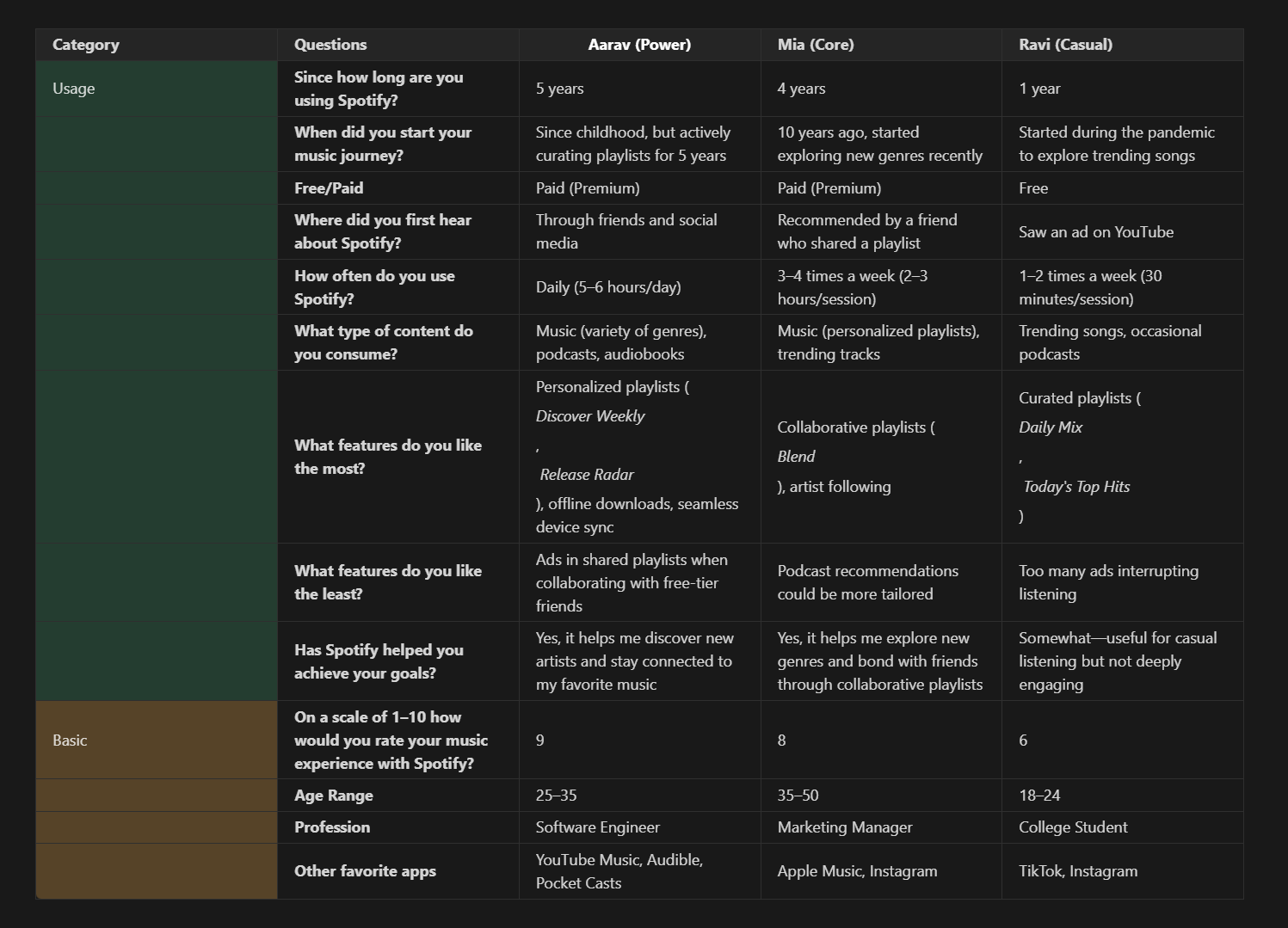
ICPs from previous Project
Monetization litmus test
Validation, even though its obviously monetizing.
Retention Analysis
Spotify demonstrates strong retention characteristics with evidence of a smile-shaped retention curve:
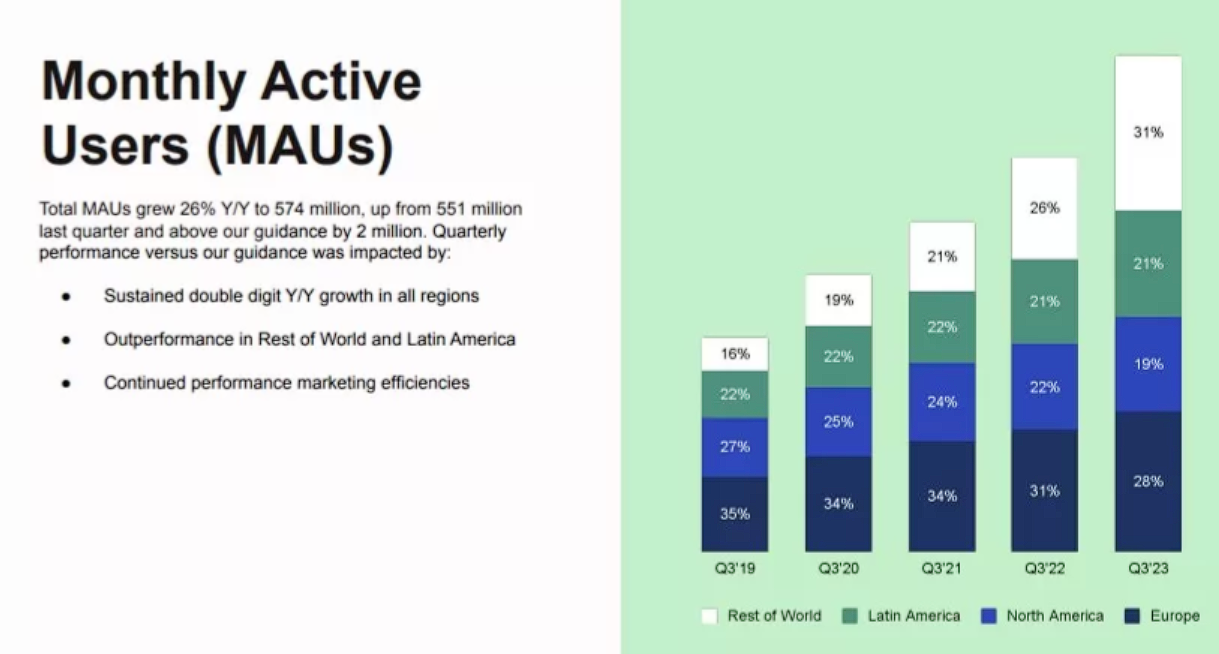
- Monthly Active Users (MAUs): 574 million as of Q3 2023, up from 551 million, showing 26% year-over-year growth
- Premium Subscribers: 226 million users have opted for premium subscriptions
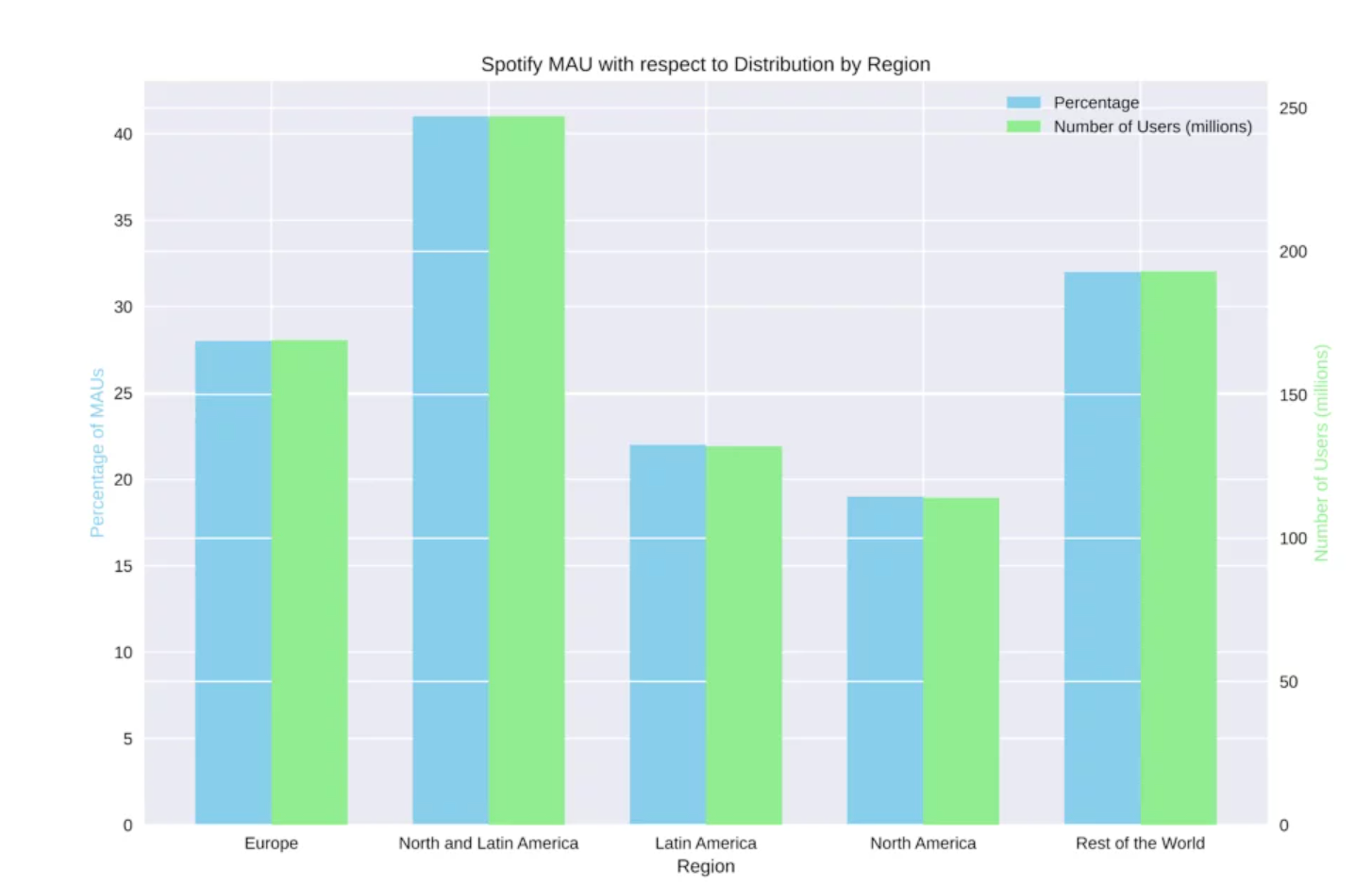
- Geographic Distribution: Europe leads with 28% of monthly active listeners, followed by North America at 19%
Spotify's retention success is driven by:
- Personalized content recommendations that keep users returning
- Social features that increase stickiness (users with 3+ friend interactions show >90% monthly retention)
- Regular feature updates and exclusive content that maintain user interest
Depth of Engagement
Spotify shows strong engagement metrics across multiple dimensions:
Engagement Metric | Performance |
|---|---|
Content Library | 100+ million records, 5+ million podcasts |
Content Growth | ~1,800,000 new songs added monthly |
Feature Utilization | High engagement across playlists, podcasts, and social sharing |
Core Power Users | Premium subscribers (226M) represent ~39% of total user base |
Spotify's engagement strategy includes:
- Hyper-personalized recommendations like "Taylor Swift Mix" or "Your Morning Brew"
- Diverse content offerings beyond music (podcasts, audiobooks)
- Social integration features enabling shared playlists and friend following
- Data storytelling through features like Spotify Wrapped
Willingness to Pay
Spotify has successfully monetized a significant portion of its user base:
- Premium Revenue: €8.396 billion for partial 2023 (Q1-Q3), following €10.25 billion in 2022
- Ad-Supported Revenue: €1.180 billion for partial 2023 (Q1-Q3), with 17% year-over-year growth
- Total Revenue Projection: €13.28 billion for full 2023
Research on willingness to pay (WTP) reveals:
- Standard WTP range: $5-$15 for monthly subscriptions
- Current standard plan: $9.99/month (aligns with average WTP)
- Family plan WTP: Data suggests users would pay $18-$25 for family plans
- Current family plan price: $14.99/month (potentially underpriced by $3-$10)
Litmus Test Results
Based on the data analysis, Spotify demonstrates:
- Strong Retention: Smile-shaped retention curve with growing MAUs and premium subscribers
- Deep Engagement: High engagement frequency, multiple feature usage, and strong core user base
- Proven Willingness to Pay: 226 million premium subscribers with consistent revenue growth
This indicates Spotify has successfully passed the monetization litmus test. The platform has established:
- A product users return to consistently
- Deep engagement with multiple features
- A significant portion of users willing to pay for premium services
If your product is already monetizing
Skip the litmus test and create at least 3 experiments for free to paid conversion and cross-selling and up-selling
Monetization Opportunities
While Spotify has successfully monetized its platform, the analysis reveals several opportunities:
- Family Plan Pricing: Current pricing ($14.99) is below WTP ($18-$25), suggesting room for price increases
- Premium Audio Tier: Potential for a higher-priced HiFi/Music Pro tier for audiophiles
- Enhanced Creator Monetization: Expanding the Partner Program to more markets
- Geographic Expansion: Tailoring pricing strategies for emerging markets with growing user bases
By addressing these opportunities, Spotify can further optimize its monetization strategy while maintaining its strong user retention and engagement metrics.
Geographic Distribution of Spotify Users
As of Q4 2024, Spotify's 675 million monthly active users are distributed across four main regions, with significant variations in both user numbers and engagement patterns.
Regional User Distribution
The "Rest of World" category now represents the largest portion of Spotify's user base:
Region | Monthly Active Users | Share of Total Users |
|---|---|---|
Rest of World | 230 million | 34% |
Europe | 182 million | 27% |
Latin America | 149 million | 22% |
North America | 115 million | 17% |
This distribution demonstrates Spotify's successful expansion beyond its traditional strongholds in Europe and North America, with emerging markets now driving significant user growth(https://backlinko.com/spotify-users)
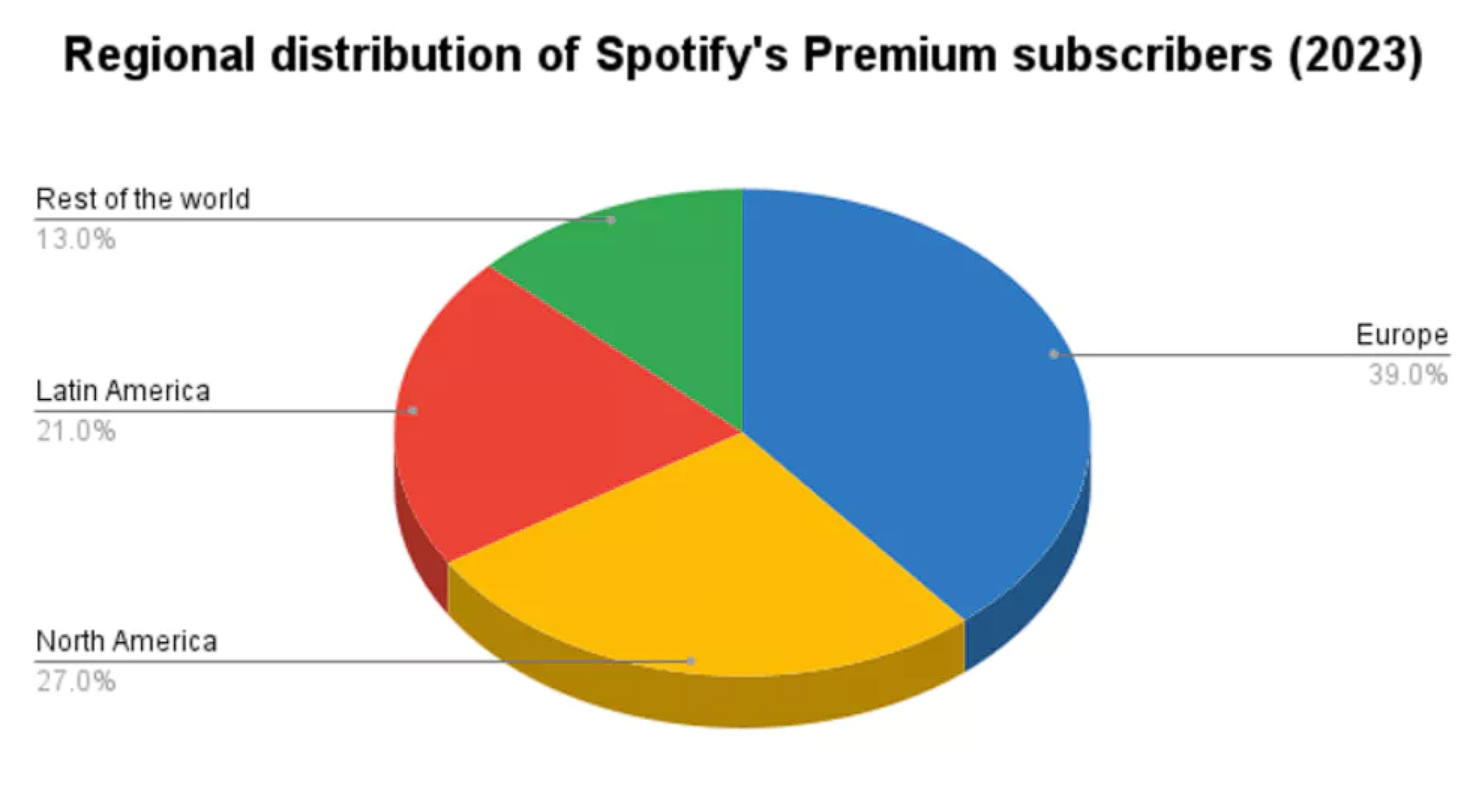
Premium Subscriber Distribution
While the Rest of World leads in total users, Europe and North America dominate in premium subscriptions:
Region | Premium Subscribers | Share of Premium Subscribers |
|---|---|---|
Europe | 97 million | 37% |
North America | 68 million | 26% |
Latin America | 58 million | 22% |
Rest of World | 37 million | 14% |
This indicates a higher conversion rate to paid subscriptions in mature markets, with 63% of all premium subscribers coming from Europe and North America combined47.
Engagement Patterns by Region
Interestingly, daily usage time doesn't correlate directly with subscription rates:
Region | Average Daily Minutes Streamed |
|---|---|
North America | 140 minutes |
Middle East & Africa | 124 minutes |
Latin America | 117 minutes |
Asia Pacific | 110 minutes |
Europe | 99 minutes |
Despite having the most users and premium subscribers, Europeans spend the least amount of time on the platform daily, while North Americans are the most engaged users17.
Growth Trends
Spotify's user base has shown consistent regional growth patterns:
- The Rest of World category has seen the most dramatic increase, surpassing Europe as the largest market for the first time in 20237
- Latin America continues steady growth in both users and premium subscribers
- Europe maintains its position as the region with the highest premium subscription rate
- North America shows more modest growth but maintains strong monetization
This geographic distribution highlights Spotify's evolution from a primarily European service to a truly global platform, with different regions showing varying patterns of adoption, engagement, and willingness to pay for premium features.
Spotify's Strategy in India
Spotify has been strategically expanding in India's rapidly growing music streaming market, which is projected to surpass $870 million by 20253. Since its launch in February 2019, Spotify has gained approximately 26% market share in India6, making significant inroads in this competitive landscape.
Localized Pricing Structure
Spotify has implemented India-specific pricing strategies to accommodate the price-sensitive market:
- Premium Mini plans priced as low as ₹7/day or ₹25/week, offering ad-free listening without long-term commitment3
- Standard premium plan at ₹119/month4
- The upcoming "Music Pro" HiFi tier is expected to cost around ₹150 in India4
Artist Empowerment
Spotify has transformed India's music landscape by:
- Shifting from Bollywood soundtrack dominance to artist-driven content6
- Supporting over 28,000 Indian artists through Spotify for Artists, doubling this number in just one year6
- Highlighting emerging talent through playlists like Fresh Finds and Spotify RADAR6
Content Localization
The platform has optimized its service for Indian audiences by:
- Including regional languages and genres such as Bollywood music2
- Creating localized playlists that resonate with Indian listeners2
- Expanding into India's podcasting market, which is growing at a CAGR of 34%6
Market Performance
The impact of Spotify's strategies in India is evident:
- Over 70% of streams in India now feature local artists6
- Indian music consumption globally grew by 85% in 2023, particularly Punjabi music3
- Arijit Singh, a renowned Indian playback singer, leads global Spotify rankings with 134.2 million followers, gaining approximately 97,500 new followers daily9
Future Outlook
Spotify CEO Daniel Ek has expressed confidence that "India will be a substantial business in the long term"11. The company continues to invest in the region through:
- Audio advertising opportunities aligned with user base growth3
- Voice search integration for the Indian market3
- Seamless payment integration systems3
When to Charge? Mapping Spotify's Aha and Happy Moments
Timing monetization correctly is critical for Spotify's success. By identifying key "Aha Moments" and "Happy Moments" in the user journey, we can pinpoint optimal monetization opportunities that align with high perceived value.
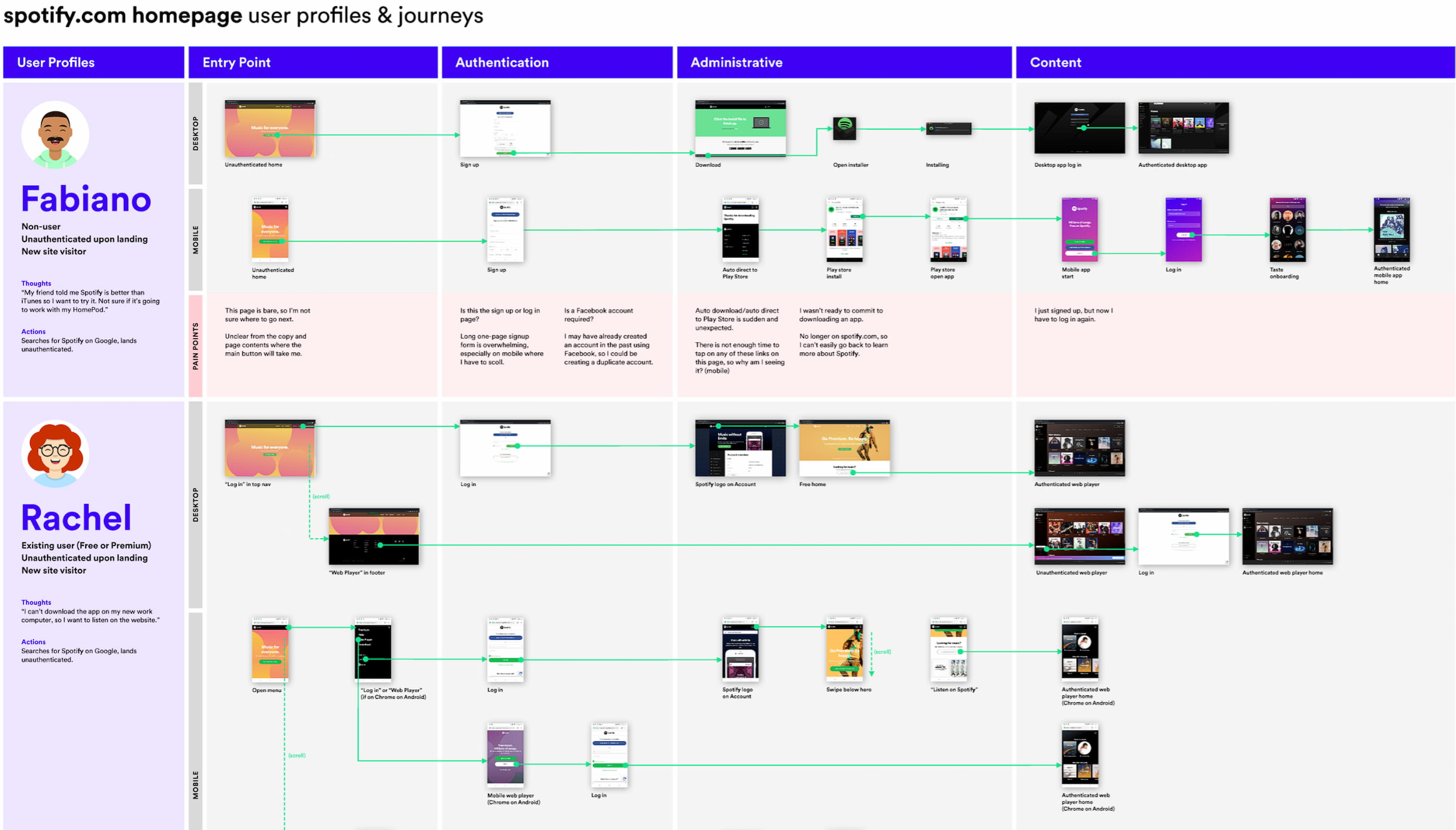
Spotify's Customer Journey Map
Based on Spotify's user journey mapping for their music sharing feature, we can identify several key touchpoints where users experience significant value:
- Discovery Phase: When users find new music through personalized recommendations
- Listening Phase: When users enjoy uninterrupted playback of their favorite content
- Sharing Phase: When users share playlists or songs with friends
- Social Interaction Phase: When users receive feedback on shared music
Aha Moments in Spotify's User Journey
Aha Moments are those critical instances when users first realize the core value of Spotify:
- Personalization Aha Moment: When users first experience how accurately Discover Weekly or Release Radar matches their taste (typically within 2-3 weeks of use)
- Offline Listening Aha Moment: When premium users first realize they can listen without internet connection
- Cross-Device Aha Moment: When users seamlessly transition between devices without losing playback position
- Social Discovery Aha Moment: When users discover new music through friends' shared playlists
Happy Moments in Spotify's User Journey
Happy Moments are recurring positive experiences that reinforce the value proposition:
- Ad-Free Listening: Every time premium users enjoy uninterrupted listening sessions
- Playlist Completion: When users finish creating the perfect playlist for a specific mood or occasion
- Wrapped Experience: Annual year-in-review that creates shareable content about listening habits
- Successful Recommendations: When the algorithm suggests songs that perfectly match the user's taste
Perceived Value vs. Price Analysis
When plotting perceived value against price points, we observe:
- Highest Perceived Value:
- During the first discovery of personalized recommendations
- When experiencing ad-free listening for the first time
- When using offline listening during travel
- During the annual Wrapped experience
- Lowest Perceived Value:
- During periods of content exploration with few matches
- When experiencing technical issues
- When desired content is unavailable in their region
Optimal Monetization Timing
Based on this analysis, Spotify should time monetization requests to coincide with peak perceived value moments:
- After Discovery Weekly Impact: Prompt free users to upgrade after they've experienced 2-3 highly successful Discovery Weekly playlists
- Pre-Travel Moments: Target users with offline listening benefits before detected travel periods
- Post-Social Sharing: Offer premium trials after users attempt to share playlists (addressing the "fear of judgment" pain point)
- Seasonal Peaks: Align premium promotions with year-end Wrapped experiences when engagement peaks
Implementation Strategy
To optimize "when to charge," Spotify should:
- Trigger-Based Prompts: Deploy upgrade prompts immediately following high-value experiences rather than on fixed schedules
- Value Reinforcement: Highlight specific features that created the recent Aha Moment in upgrade messaging
- Contextual Pricing: Adjust pricing displays based on the specific value pathway the user has experienced
- Friction Timing: Strategically introduce free tier limitations (like ads) immediately after high-value experiences to create contrast
By aligning monetization timing with moments of peak perceived value, Spotify can increase conversion rates while maintaining positive user sentiment throughout the journey.
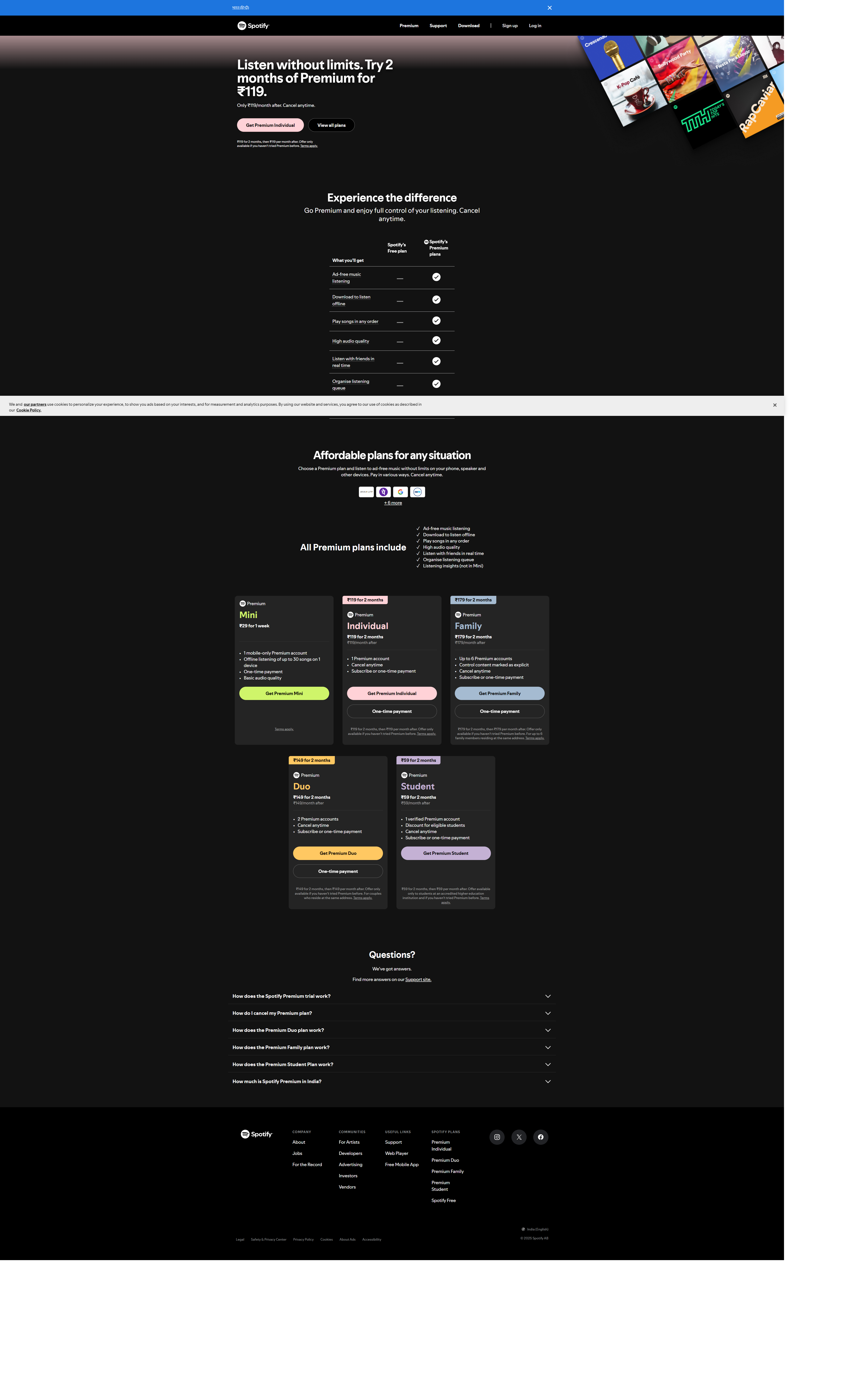
Pricing Page Analysis: Spotify's Current Conversion Strategy
Examining Spotify's current pricing page reveals a sophisticated tiered approach with multiple subscription options tailored to the Indian market. As of March 2025, Spotify offers five distinct premium plans:
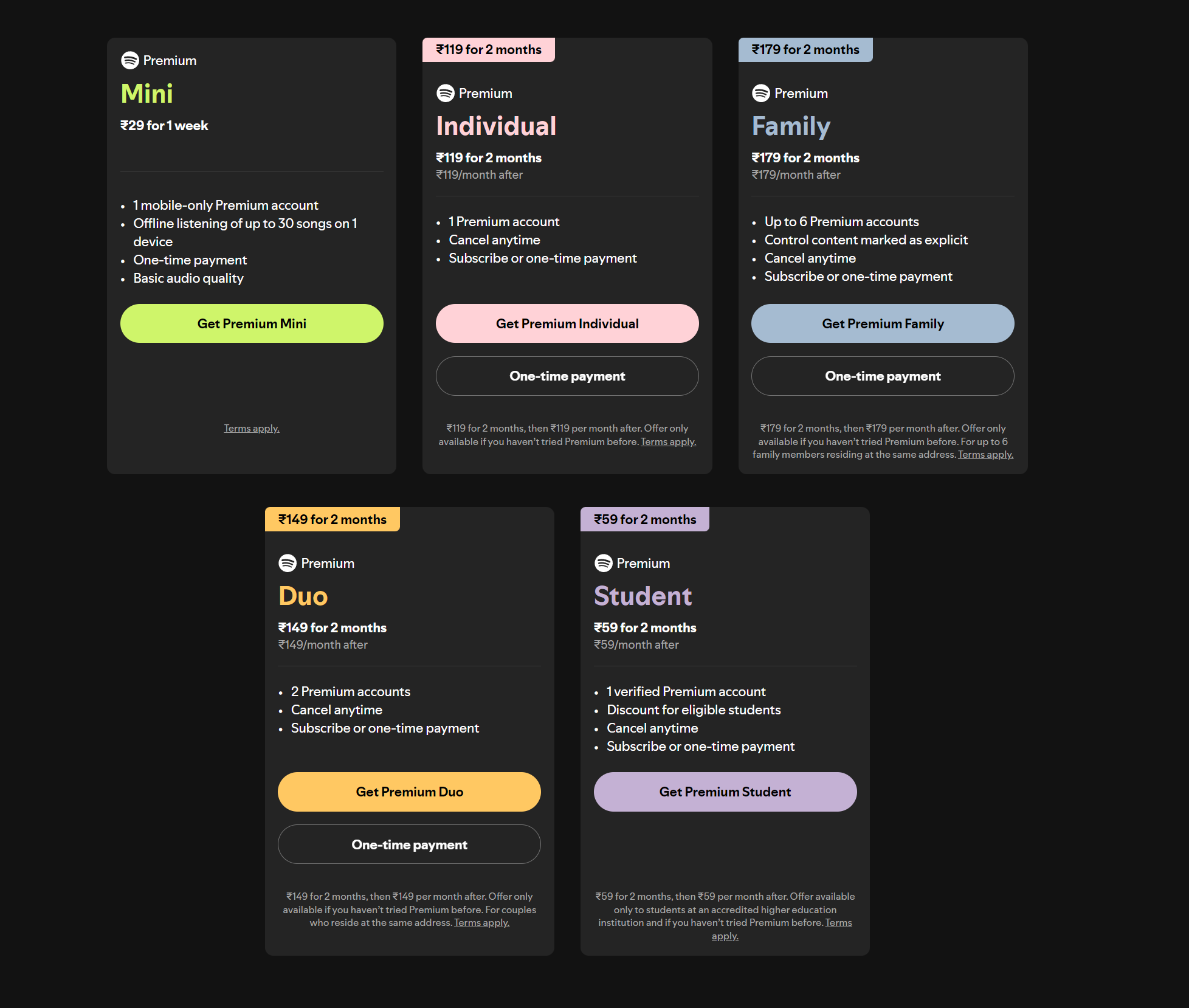
Current Plan Structure
Plan | Price | Key Features | Target Segment |
|---|---|---|---|
Premium Mini | ₹29/week | Mobile-only, 30 songs offline, basic audio quality | Casual users, price-sensitive |
Premium Individual | ₹119/month | Full features, high quality audio, offline listening | Core users |
Premium Duo | ₹149/month | 2 Premium accounts, same address requirement | Couples |
Premium Family | ₹179/month | Up to 6 accounts, explicit content controls | Households |
Premium Student | ₹59/month | Verified student status, full Premium features | Students |
Strategic Insights
Spotify's current pricing page demonstrates several strategic elements:
- Time-Limited Promotions: Currently running a "₹119 for 4 months" promotion for new Premium Individual subscribers, ending March 9, 2025 (tomorrow)
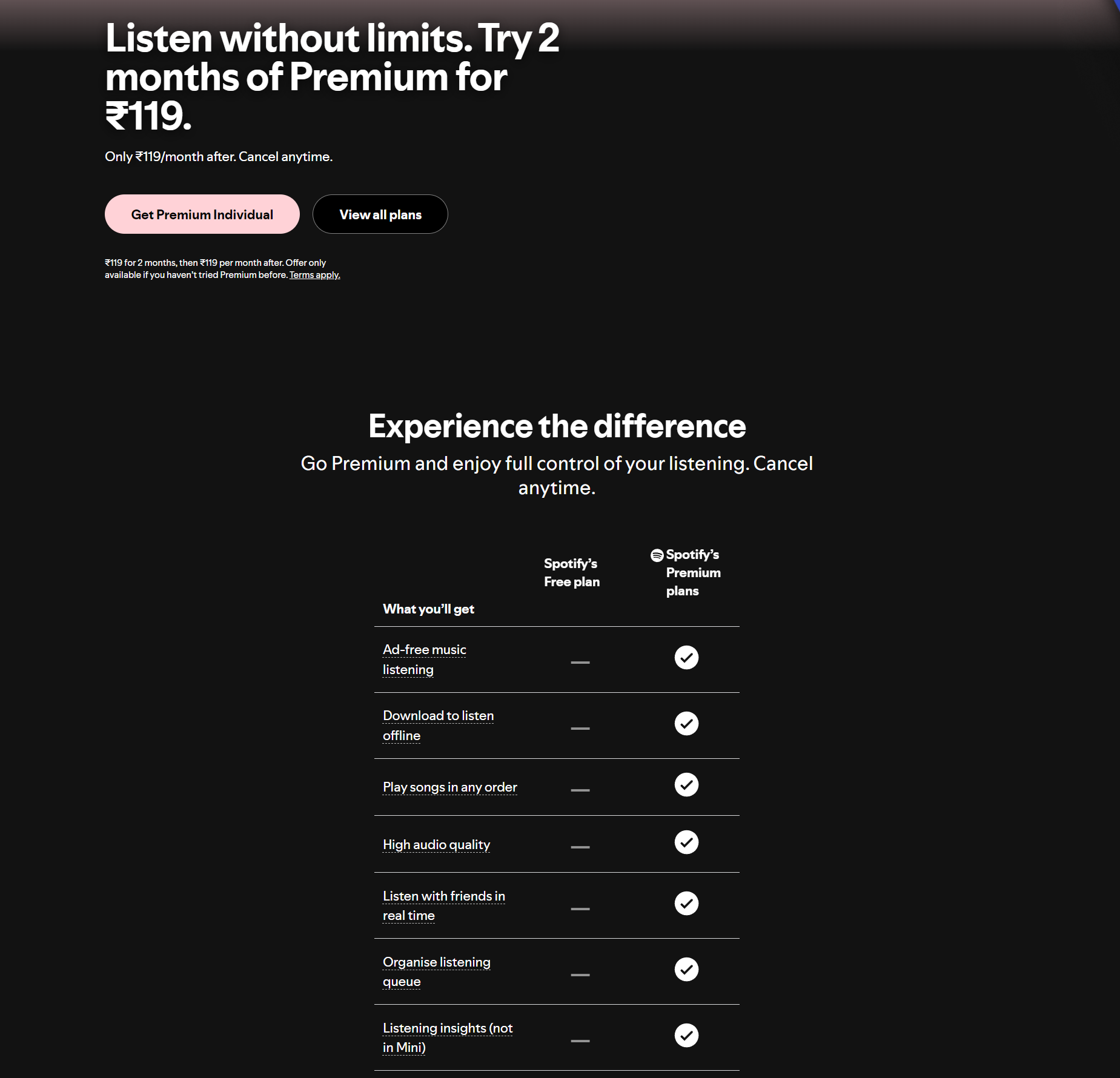
- Value Comparison: Clear side-by-side comparison between Free and Premium plans highlighting seven key differentiating features:
- Ad-free music listening
- Offline downloads
- Unrestricted playback order
- High audio quality
- Social listening
- Queue organization
- Listening insights
- Friction Reduction: Multiple payment options including one-time payment and subscription models with "cancel anytime" assurance prominently displayed
- Segmentation Approach: Tailored offerings for different user groups with appropriate price discrimination (students pay 50% of standard rate)
Current Page
Opportunities for Improvement
While Spotify's current pricing page effectively communicates plan differences, several optimization opportunities exist:
- Emotional Triggers: Limited use of emotional benefits beyond functional features
- Personalization: No dynamic content based on user listening history or preferences
- Social Proof: Absence of testimonials or user statistics to reinforce decision
- Premium Mini Limitations: The entry-level Mini plan has significant restrictions (30 songs, mobile-only) that could be better highlighted for expectation management
The current pricing structure effectively implements the tiered approach we recommended in our "How Much to Charge" analysis, though it lacks the proposed Music Pro/HiFi tier that could capture additional revenue from audiophile power users.
Pricing Page Optimization
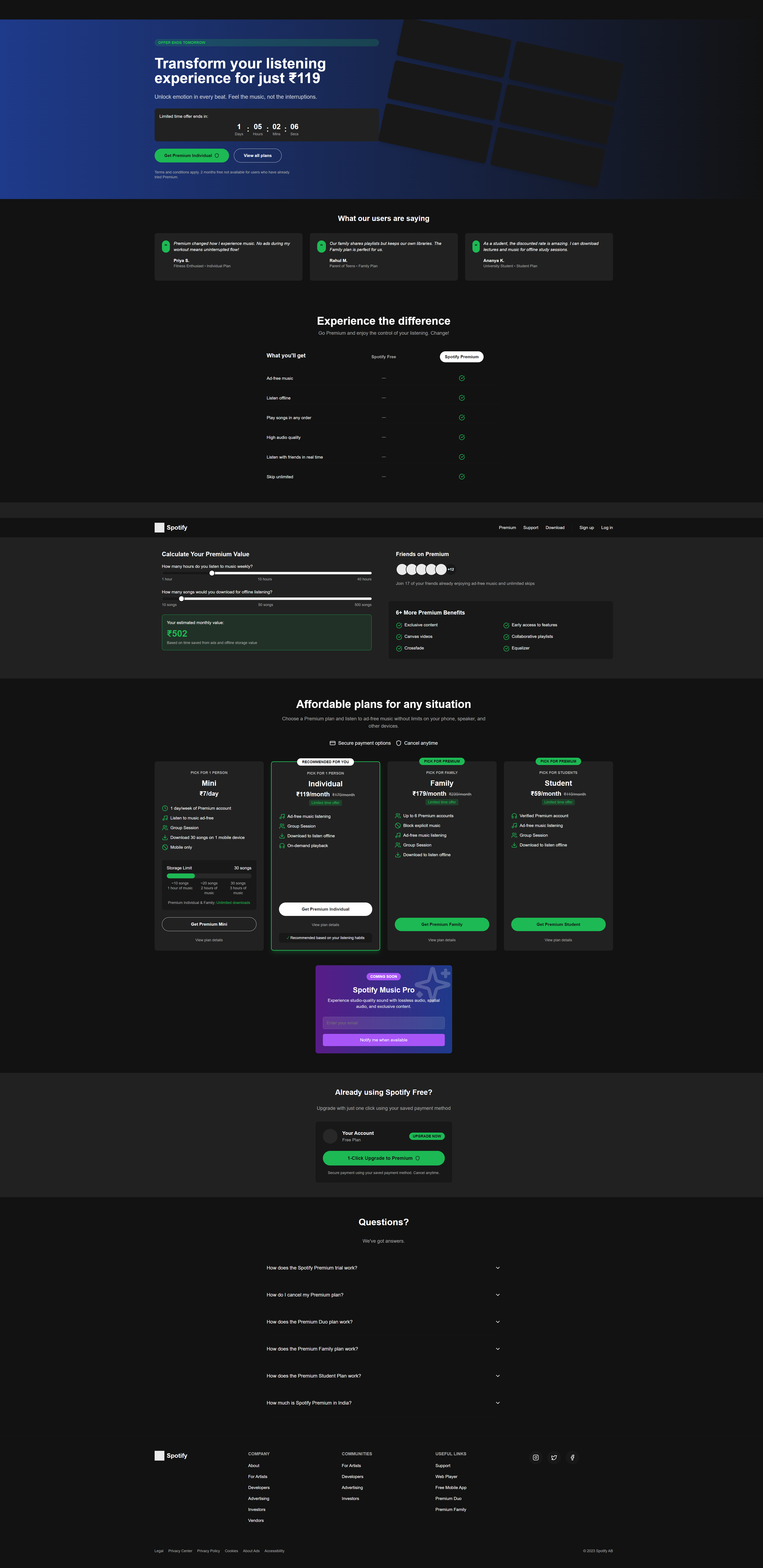
- Enhance Value Visualization
- Add an interactive comparison tool showing personalized savings based on user's listening habits
- Visualize the "30 songs offline" limitation of Premium Mini more clearly with a storage meter
- Create a more prominent display of the "+" 6 more features mentioned but not detailed
- Implement Emotional Triggers
- Replace the current headline "Listen without limits" with more emotionally resonant messaging
- Add testimonial snippets from similar user segments to build social proof
- Include a "Friends on Premium" section showing connections who've upgraded
- Optimize Promotional Messaging
- Highlight the urgency of the current promotion ending March 9 (tomorrow) more prominently
- Add a countdown timer to the "₹119 for 2 months" offer to create scarcity
- Create clearer visual distinction between regular pricing and promotional pricing
- Improve Plan Differentiation
- Redesign the plan cards to better highlight the recommended Individual plan
- Add visual icons for each key feature rather than just text descriptions
- Create a more intuitive comparison between Mini limitations and full Premium benefits
- Reduce Friction Points
- Simplify the payment options section to reduce choice paralysis
- Add security assurances near the payment buttons
- Implement a one-click upgrade process from the free tier with saved payment methods
- Incorporate Segmentation Insights
- Add personalized plan recommendations based on listening history
- Highlight specific features that align with the user's demonstrated preferences
- Create targeted messaging for different user segments (casual, core, power)
- Prepare for Music Pro Tier
- Reserve space for the upcoming HiFi/Music Pro tier in the pricing structure
- Add a "Coming Soon" teaser for enhanced audio quality options
- Create an email notification signup for users interested in premium audio
Prototype with Improvements
https://v0-image-analysis-six-rho.vercel.app
Brand focused courses
Great brands aren't built on clicks. They're built on trust. Craft narratives that resonate, campaigns that stand out, and brands that last.


All courses
Master every lever of growth — from acquisition to retention, data to events. Pick a course, go deep, and apply it to your business right away.





Courses
Built by Leaders From Amazon, CRED, Zepto, Hindustan Unilever, Flipkart, paytm & more










Crack a new job or a promotion with ELEVATE
Designed for mid-senior & leadership roles across growth, product, marketing, strategy & business




Learning Resources
Browse 500+ case studies, articles & resources the learning resources that you won't find on the internet.

Patience—you’re about to be impressed.